Piston Air Compressors About
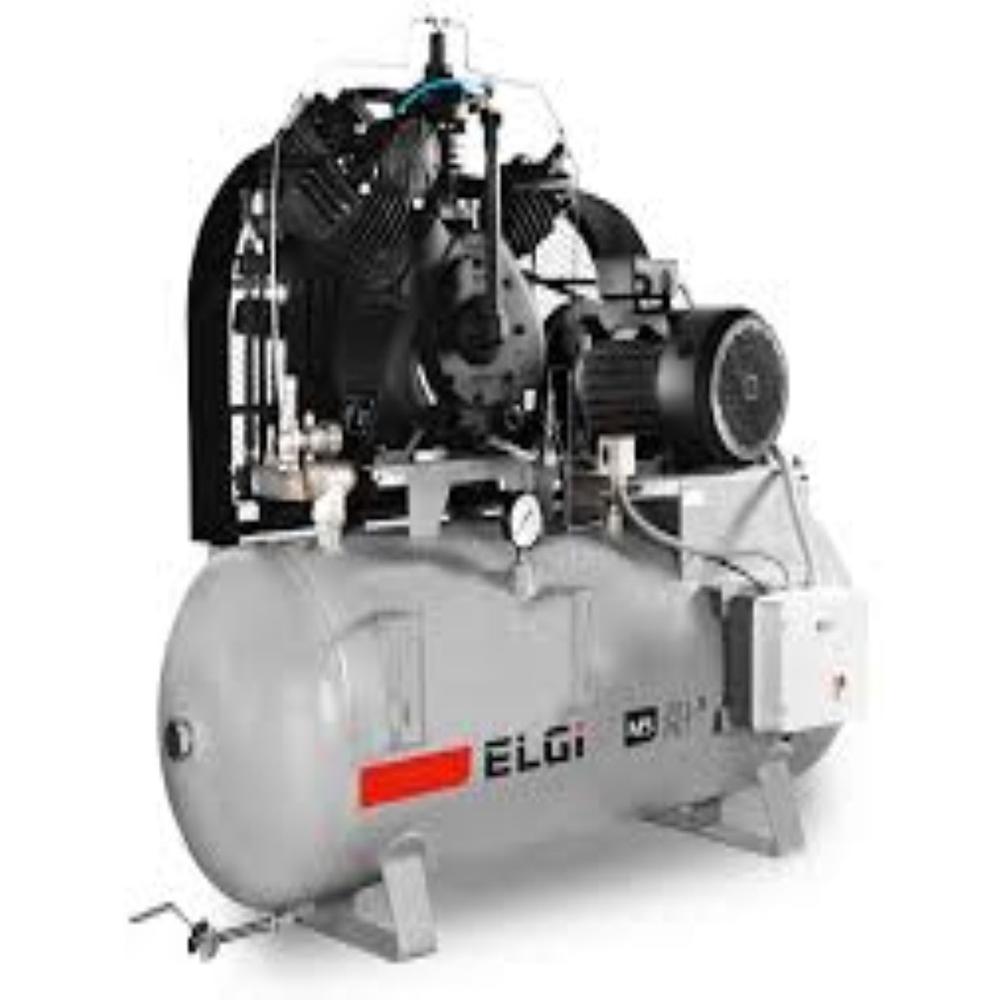
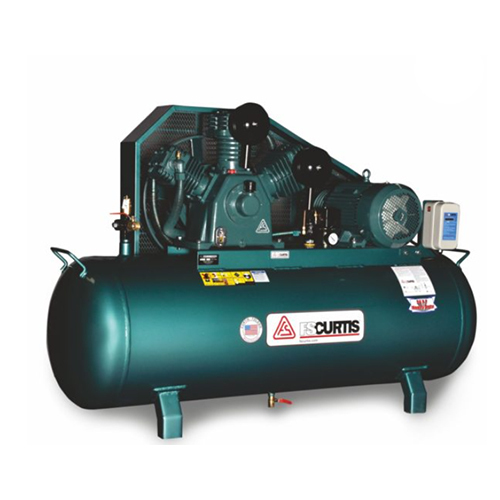
A piston air compressor is a type of air compressor that uses a piston moving inside a cylinder to compress air. It is widely used for workshops, garages, small industries, and home applications due to its durability, high-pressure capability, and affordable cost.
Detailed Description
Piston air compressors operate using a crankshaft-driven piston that moves up and down inside a cylinder:
-
Intake stroke: The piston moves down, drawing atmospheric air into the cylinder through an intake valve.
-
Compression stroke: The piston moves up, compressing the air and pushing it into a storage tank via a discharge valve.
This back-and-forth (reciprocating) motion allows piston compressors to generate high-pressure air, making them suitable for powering pneumatic tools, inflating tires, spray painting, and various industrial tasks.
Types of Piston Air Compressors
1. Single-Stage
-
Air compressed once.
-
Suitable for lower pressures (up to ~100 PSI).
-
Ideal for garages, small shops, and home use.
2. Two-Stage
-
Air compressed twice, with an intercooler between stages.
-
Produces higher pressures (up to ~175200 PSI).
-
Used in manufacturing, auto service centers, and heavy-duty industrial work.
3. Oil-Lubricated
4. Oil-Free
-
Special coatings reduce frictionno oil in the compression chamber.
-
Used for clean-air requirements (food, pharma, medical).
Reliable Power for Industrial ApplicationsThese piston air compressors are crafted to provide consistent and dependable air supply essential for industrial tools and machinery. With support for voltages from 110 to 215 V, they accommodate varying electrical setups across different industries.
Built to Last with Advanced FeaturesConstructed from high-quality mild steel and supported by a 1-year warranty, the compressors are designed to endure the rigors of industrial environments. Their mute operation ensures minimal noise, fostering a more comfortable and productive workspace.
FAQ's of Piston Air Compressors:
Q: How does the mute feature benefit industrial environments when using these piston air compressors?
A: The mute feature (rated at 1) significantly reduces noise levels, making the compressors ideal for industrial settings where a quieter workspace can enhance concentration, communication, and worker comfort.
Q: What is the process for installing a piston air compressor with a voltage of 110-215 V?
A: Installation involves securely placing the compressor on a level surface near an appropriate electrical outlet. Ensure the power source matches the 110-215 V requirement, connect it to your industrial setup, and follow the user manual for safe startup and operation.
Q: When should regular maintenance be performed on these new piston air compressors?
A: Routine maintenance, such as checking oil levels, inspecting filters, and examining for leaks or loose connections, should be performed monthly or as specified by the manufacturer to ensure optimal performance and an extended service life.
Q: Where can these industrial piston air compressors be effectively utilized?
A: They are well-suited for factories, manufacturing plants, workshops, and other industrial environments throughout India where reliable and efficient air supply is essential for machinery operation.
Q: What are the main benefits of choosing a piston air compressor constructed from MS (Mild Steel)?
A: Mild steel provides excellent durability and resistance to wear, making it ideal for heavy-duty industrial applications. This ensures a longer lifespan and stable performance under continuous use.
Q: How can industrial users ensure they receive proper warranty support for these air compressors?
A: To access warranty support, users should purchase the compressor from authorized suppliers or traders in India, retain proof of purchase, and follow the manufacturer's maintenance guidelines throughout the 1-year warranty period.
Q: What industrial tasks are best suited for this type of air compressor?
A: These compressors are ideal for tasks such as powering pneumatic tools, supporting assembly lines, painting, and general machinery operations where a quiet, steady, and robust air supply is required.







 Send Inquiry


 Send Inquiry
